
 Global
Shop our 10x20 tent for outdoor parties, weddings & backyard events. Waterproof, spacious shelter with optional sidewalls. Fast setup & durable frame.
A 10x20 tent serves as a versatile freestanding shelter option built for short-term and semi-permanent coverage needs. Balancing easy setup and reliable weather resistance, this shelter size strikes a balance between spacious interior footprint and manageable transport, making it widely adopted across many casual and commercial scenarios.
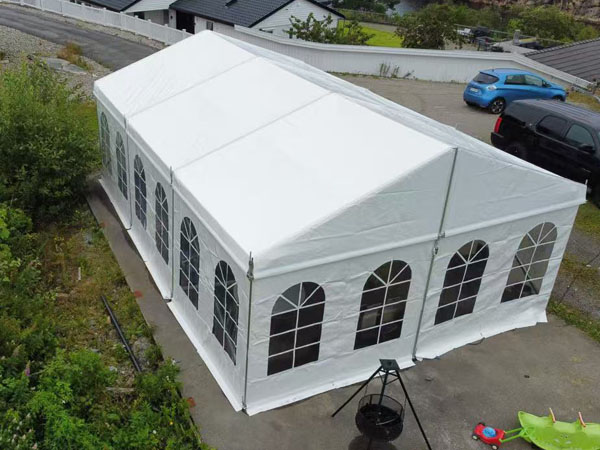
The 10x20 tent refers to a shelter with a base dimension of 10 units by 20 units. It delivers an open, unobstructed inner area without internal support poles occupying the main usable space. The overall design prioritizes modularity, which means individual components can be packed into compact bundles for convenient carrying and storage when not in use. Unlike small pop-up tents for personal camping, this size is engineered to accommodate group activities, equipment placement and temporary workspace layout. It is designed to be assembled on flat ground and can be adjusted with optional add-ons to fit different environmental conditions.
10x20 tents can be grouped based on frame material and functional orientation. Framed types are commonly split into metal frame versions and lightweight composite frame versions. Metal frame models feature stronger load-bearing capacity and are suitable for repeated long-duration use. Lightweight composite frames reduce total weight and are preferred for frequent relocation.
From the perspective of usage purpose, they can be sorted into event display tents, storage shelter tents and activity shade tents. Event display tents focus on clean appearance and flexible side panel configuration. Storage shelter tents emphasize sealing and dust prevention. Activity shade tents prioritize ventilation and sun-blocking performance. Some hybrid versions combine multiple functions to switch between different application modes by adding or removing accessories.
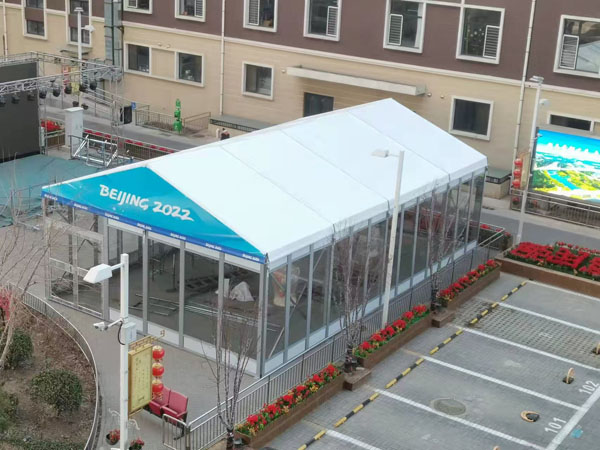
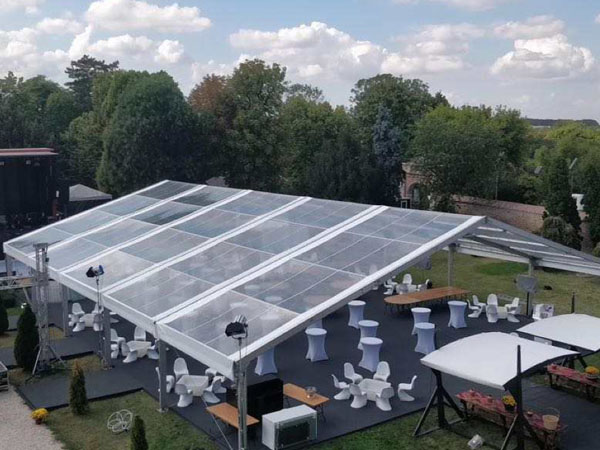
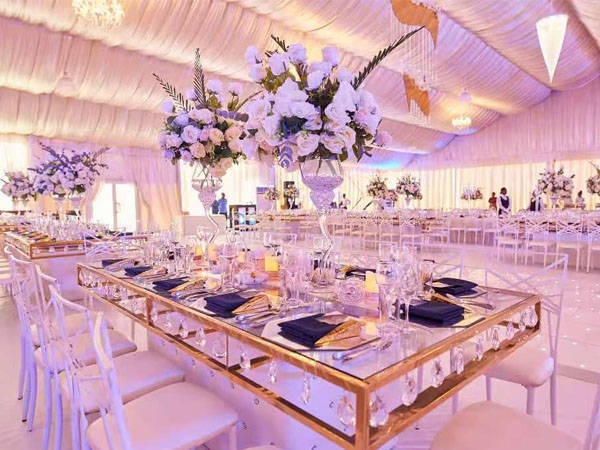
This tent size covers a broad range of usage scenarios. For outdoor events, it offers covered space for booth displays, temporary gathering zones and catering service areas. In private use, it works as a covered parking space for vehicles, a backyard leisure pavilion or a temporary workshop for hobby projects.
It can also act as a short-term storage area to shield tools, goods and bulky equipment from direct sunlight and rainfall. For community outdoor activities, it creates shaded rest zones and registration stations. In emergency temporary arrangements, it provides rapid covered space for on-site coordination. Since the interior keeps a large clear span, users can freely arrange tables, shelves and other facilities inside according to their own layout needs.
One core feature is the open clear-span interior. Without center support poles blocking the space, users can fully utilize the whole floor area. The modular design allows flexible expansion or partial disassembly; side panels, doors and window sections can be attached or detached separately.
The shelter has basic weather-adaptive performance, blocking direct solar radiation and light rain. Frame connections adopt locking structures to enhance overall stability after proper anchoring. Most versions support fast disassembly, and disassembled parts occupy limited storage space. The appearance can be customized in terms of fabric color, and printed graphics can be added on the surface of the篷布 to meet display needs. Meanwhile, the design reserves space for additional accessories to upgrade wind resistance, privacy and ventilation as required.
The main frame forms the load-bearing skeleton of the whole tent. It consists of vertical support posts, horizontal cross beams and sloped roof beams. All connecting joints are designed for quick assembly, and matching connectors lock each frame piece together tightly. The roof beam system forms a sloped profile, which helps rainwater flow off the surface naturally and avoids water pooling on the top fabric.
Frame tubes are produced with uniform sizing to guarantee interchangeability of spare parts. The vertical posts transfer the weight of the roof and external loads down to the ground. Optional reinforced bracing pieces can be installed between posts and beams to improve the rigidity of the whole structure when facing stronger wind. The frame itself does not rely on permanent fixed foundation, so it can be relocated to another flat site after full disassembly.
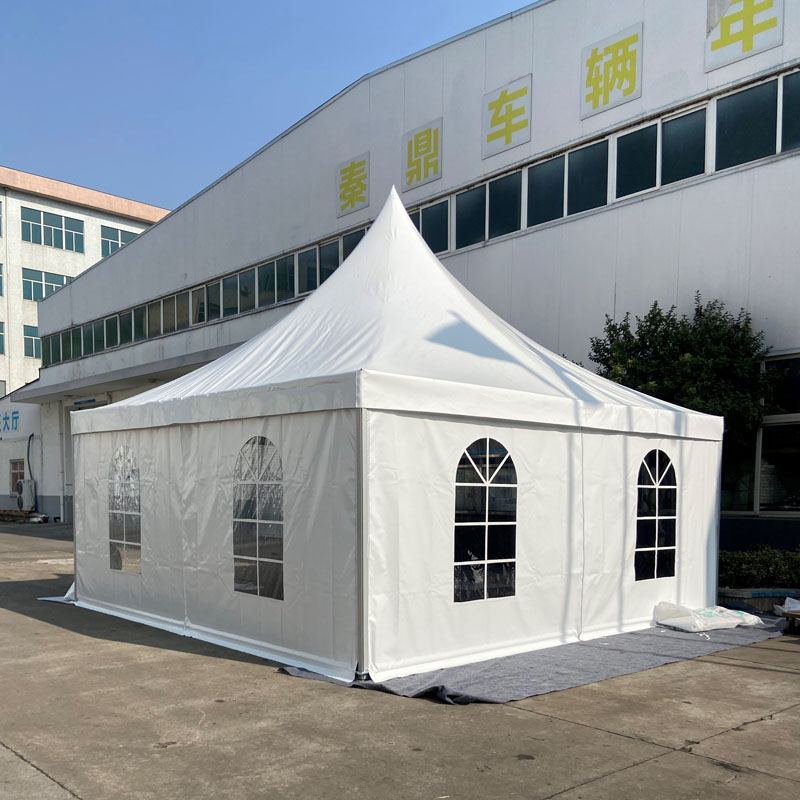
The tent fabric forms the roof and enclosure system. The roof fabric is the primary weather barrier, stretched tightly over the frame to maintain proper tension. Side enclosure panels are optional components. Users can choose to install full solid side panels for privacy and wind protection, mesh panels for ventilation while keeping insects out, or a mix of both types.
Some enclosure panels are fitted with zippered door openings for easy access. Window sections can also be integrated into side panels to bring natural light into the shelter. The fabric has flexible connection methods such as straps, hook-and-loop fasteners or plastic clips to fasten onto the frame. When not needed, side panels can be rolled up, tied back or removed entirely to turn the tent into an open shaded canopy. The fabric is engineered to resist fading under prolonged sun exposure and maintain surface integrity under normal outdoor conditions.
A complete supporting accessory set helps optimize the tent’s stability and usability. Ground anchoring accessories include stakes and tension tie-downs, which secure the tent to grass, soil or soft ground. Weight bags are supplied for hard pavement where stakes cannot be driven into the surface.
Other optional accessories include internal lighting hanging kits, gutter attachments to guide rainwater away from the tent edges, and floor mats laid inside for ground protection. Replacement parts such as extra connectors, fabric patches and tension straps are available for maintenance. Users can select accessories according to the ground condition, local wind situation and specific usage demands. The accessory system is compatible with the modular design, so users only purchase the extra parts they actually need.
Installation should start by selecting a flat, level site and clearing away sharp stones, branches and debris that may puncture the fabric. First, lay out all frame components and check each piece to confirm completeness. Assemble the roof frame section on the ground before standing up the vertical support posts.
After the main frame is erected, drape the roof fabric over the frame and fasten the fixing points evenly to keep consistent tension. Attach side panels and doors in sequence if they are required. Once the fabric is properly positioned, apply anchoring devices and tension straps to secure the whole shelter. It is important to adjust tension evenly to avoid local overstretching of the fabric.
Regular inspection during use is recommended. Check connectors and anchoring points periodically, especially after strong wind or heavy rain. When dismantling, reverse the assembly steps, clean fabric surfaces before storage, and keep all components dry to reduce the risk of mold and corrosion.
Support services cover guidance for assembly troubleshooting and component replacement consultation. Guidance is provided to help users solve common problems including loose connections, sagging fabric and improper anchoring. If any component suffers damage under normal usage conditions, replacement parts can be obtained separately.
Support channels offer instructions for fabric repair and routine maintenance advice. Service teams provide tips on how to extend the service life of both the frame and fabric. Users are advised to follow usage limits and remove the shelter in extreme weather. Consultation is available for questions about accessory matching and reconfiguration of the tent layout for different activities.
The 10x20 tent remains a flexible temporary shelter solution. Its modular frame, configurable enclosure fabric and rich supporting accessories allow it to adapt to diverse outdoor demands. With proper installation, anchoring and regular maintenance, it can deliver stable covered space for a long period of repeated use.
Expo Tent is a marquee manufacturer from china, marquee tents have become indispensable temporary shelter solutions for various outdoor activities, featuring diverse types, flexible customization, and outstanding practical advantages. Fully customizable to meet personalized demands, these tents support adjustable sizes, diverse color schemes, printed brand logos, and matched functional accessories like transparent windows, insulated linings, and waterproof sidewalls, perfectly adapting to weddings, trade shows, sports events, and corporate gatherings. Beyond flexible design, they boast remarkable strengths: premium waterproof, UV-resistant and flame-retardant materials ensure stable performance in changing weather, while lightweight aluminum frames enable quick assembly, disassembly and convenient transportation. With spacious unobstructed interior, excellent durability and cost-effectiveness, marquee tent delivers reliable, flexible and economical temporary space solutions for both commercial and personal outdoor scenarios.