
 Global
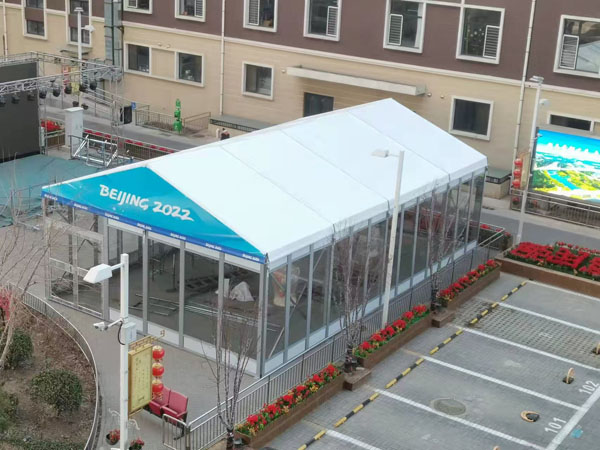
Clear Span Tent with no internal support poles delivers fully open, customizable space for weddings, trade shows, festivals and industrial storage. Modular aluminum frame & waterproof fabric, flexible layout for all outdoor temporary shelter needs.
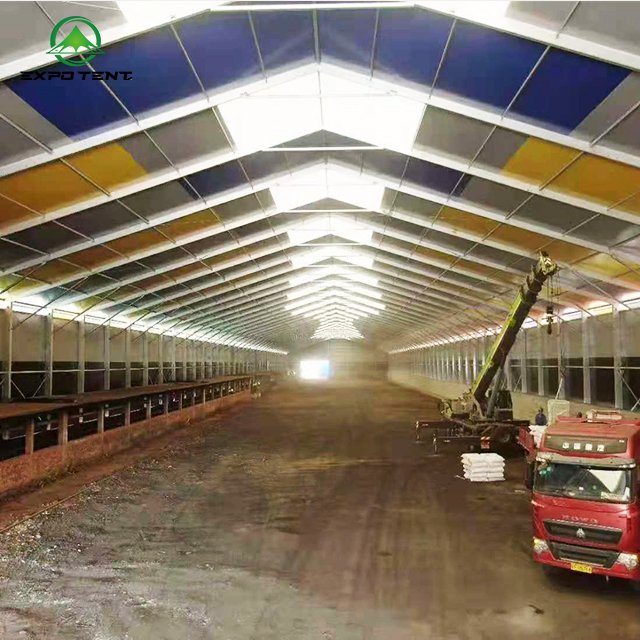
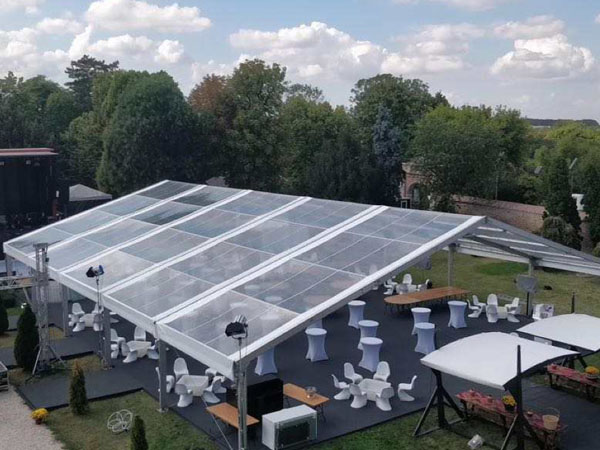
A clear span tent stands apart from many other temporary shelter structures because it removes the need for internal support poles and frames that break up usable space inside the enclosure. This core design feature defines its most valued characteristic, creating one continuous, unobstructed area from one end of the tent to the other. The span itself refers to the open distance between the two main side support systems, and every inch of that interior space remains free of vertical barriers once the tent is fully erected. People often underestimate how meaningful this simple difference can be when planning large-scale gatherings or operations, as internal poles can limit seating layouts, block movement routes, interfere with stage builds, and restrict the placement of large equipment. Without those obstructions, planners gain complete freedom to arrange the interior according to their exact needs, rather than adjusting their plans to work around a pre-set grid of support posts. The outer fabric and framing work together to carry all structural loads outward to the perimeter anchors and side beams, distributing tension and weight evenly across the entire framework. This load distribution approach allows the tent to cover wide areas while maintaining a smooth, stable outer silhouette, and it also creates a flexible footprint that can be extended in length by adding additional framing sections along its run. Many users first discover this style of tent when they realize traditional framed tents cannot accommodate their layout vision, and they quickly recognize that the open interior fundamentally changes what can be accomplished under the cover. Whether the space will hold rows of seating, display booths, heavy machinery, dining tables, or a combination of different elements, the blank canvas inside removes countless logistical headaches that come with conventional temporary shelter options. Even basic movement through the space becomes simpler, since staff, guests, vehicles, and supplies can move along straight paths without navigating around poles, which improves flow and reduces the risk of accidental collisions or damage to decorations and equipment placed within the tent boundaries.
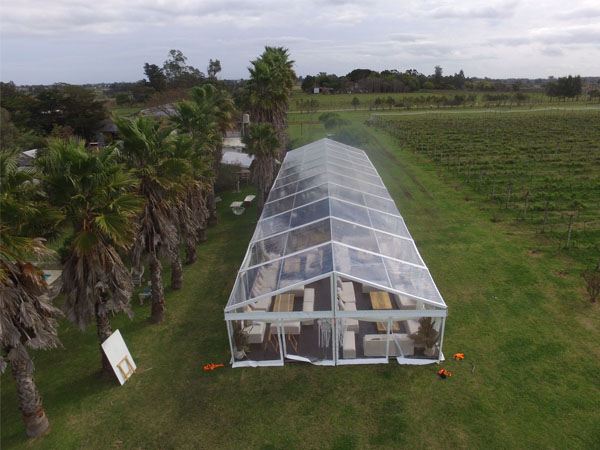
The materials chosen to build a clear span tent directly shape its durability, performance under different weather conditions, and overall visual appearance, and careful selection balances strength, weight, and long-term resilience. The outer covering is most commonly a heavy-duty synthetic fabric engineered to resist water penetration, block ultraviolet radiation from sunlight, and withstand stretching during periods of high wind. This fabric is stretched taut across the metal frame during installation, and proper tension is critical to prevent pooling of rainwater on the roof surface, which can add unexpected weight and create sagging sections over time. Beneath the fabric, the primary frame components are usually constructed from lightweight yet rigid metal alloys, formed into tubes that lock together with precision connection points. These connections are designed to transfer force safely between each section of the frame, ensuring that pressure applied to one part of the structure spreads through the whole perimeter system instead of concentrating at a single weak point. Fabric coatings add further layers of protection; some formulations slow the spread of flame, while others reduce heat transfer to keep the interior noticeably cooler on bright, sunny days. The fabric can also be manufactured in a wide range of solid colors, and semi-transparent panels are sometimes integrated to allow natural daylight to filter into the space without exposing those inside to direct harsh sunlight. Hardware pieces such as ratchet straps, tension buckles, and anchor plates are made to match the load capacity of the main frame, as weak anchoring hardware can compromise the safety of an otherwise well-built tent. Manufacturers test how these materials perform under repeated cycles of stretching, exposure to humidity, and temperature shifts, since the tent may be moved, assembled, disassembled, transported, and stored dozens of times across its service life. When stored correctly in dry, ventilated areas away from sharp objects that could tear the fabric, these components can maintain reliable performance for many years, making the tent a reusable asset rather than a one-time disposable covering.
Setting up a clear span tent follows a structured sequence that begins with site assessment and preparation long before any frame pieces or fabric are unpacked. The ground surface where the tent will sit must be evaluated for stability, slope, and drainage, because standing water beneath the tent floor can create slippery conditions and slowly erode anchor security over time. Crews first mark the exact perimeter of the tent footprint, defining the outer lines where the base rails will rest and where anchoring points will be positioned. Anchoring methods adapt to the surface type; solid paved surfaces use weighted base plates or surface-mounted fixtures, while grass and soil rely on ground stakes driven deep enough to resist pulling force when wind pushes against the tent walls and roof. Once anchor points are ready, the base frame sections are laid out and connected to form the rectangular outer boundary, and vertical support posts are attached to these base rails to hold up the arched or peaked roof beams. The roof framing sections are assembled on the ground in many cases before being lifted into position, which simplifies alignment and reduces the amount of work performed at height. After the full skeleton of the frame is locked securely together, the fabric cover is pulled over the top and fastened to the outer edges of the frame, then tensioned gradually and evenly on all sides. Uneven tension is a common mistake during assembly, as pulling one side too tight before the opposite side can warp the frame or create weak spots in the fabric. Sidewall panels, which may be solid, windowed, or fitted with zippered entry doors, are attached last. Once assembly finishes, the crew walks the full perimeter to check every connection, strap, and anchor, verifying that nothing has loosened during tensioning. Dismantling follows the reverse order, starting with removal of sidewalls, releasing fabric tension slowly, taking down roof sections, and carefully separating frame parts before packing and rolling the fabric to avoid creases and abrasion.
Weather handling is one of the most practical considerations for anyone planning to use a clear span tent, as temporary outdoor structures must cope with shifting environmental conditions while protecting what lies inside. The taut roof profile encourages rain to run off quickly toward the edges, which is a major advantage over loosely draped tenting material that tends to catch water. Even with this design, however, the tent is not intended to withstand extreme weather events, and monitoring forecasts is essential whenever the tent is occupied. Wind creates the largest dynamic load on the structure, pushing against the broad surface area of walls and roof, and the curved or arched frame shape helps deflect wind currents rather than letting them strike a flat surface head-on. Closing solid sidewalls can increase wind resistance in some scenarios, but fully enclosed walls also create a larger sail effect, so experienced installers adjust sidewall placement based on expected wind direction and speed. In cooler weather, the enclosed space can hold heat generated by portable heating units, creating a comfortable microclimate separated from cold outdoor air, while in hot weather, opening selected sidewall panels allows cross ventilation to circulate air through the open interior. Specialized accessories can further improve comfort in harsh conditions, including insulated liner fabrics that reduce heat transfer and gutter systems that channel runoff away from entryways and walkways. It is important to understand that weather protection is not absolute, and condensation can form on the inner surface of the roof fabric when warm, moist air inside meets cooler outer fabric. This condensation may drip gently onto surfaces below, so users often add interior ceiling liners to catch moisture and prevent it from falling onto furnishings, displays, or guests. Regular visual checks during extended use help spot early signs of fabric flutter, loose anchors, or frame movement that signal the structure is being pushed near its operating limits.
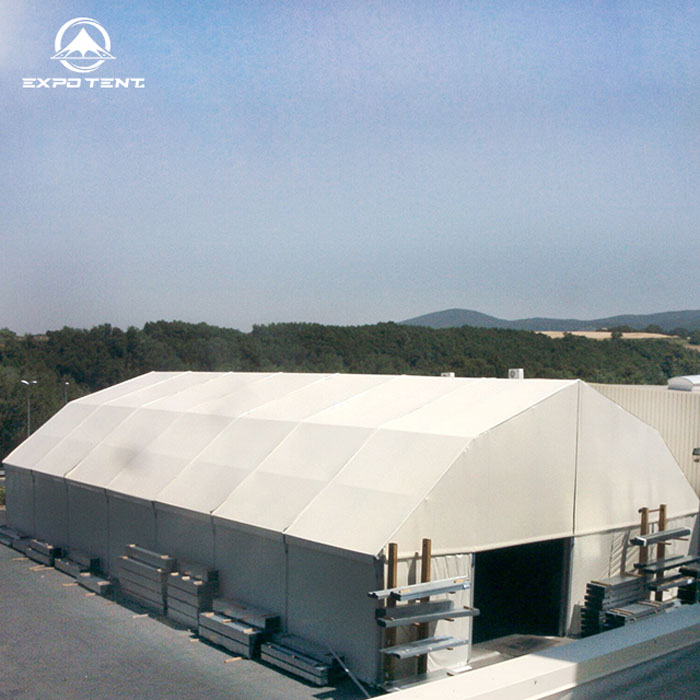
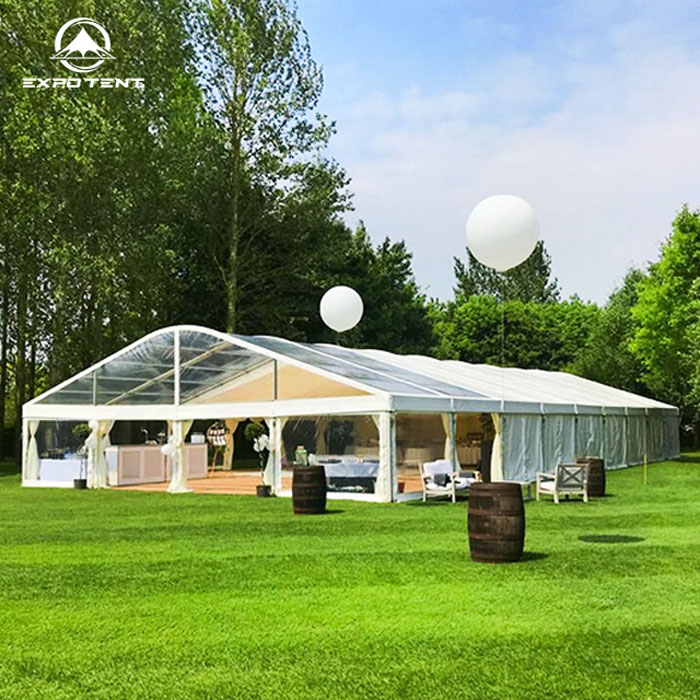
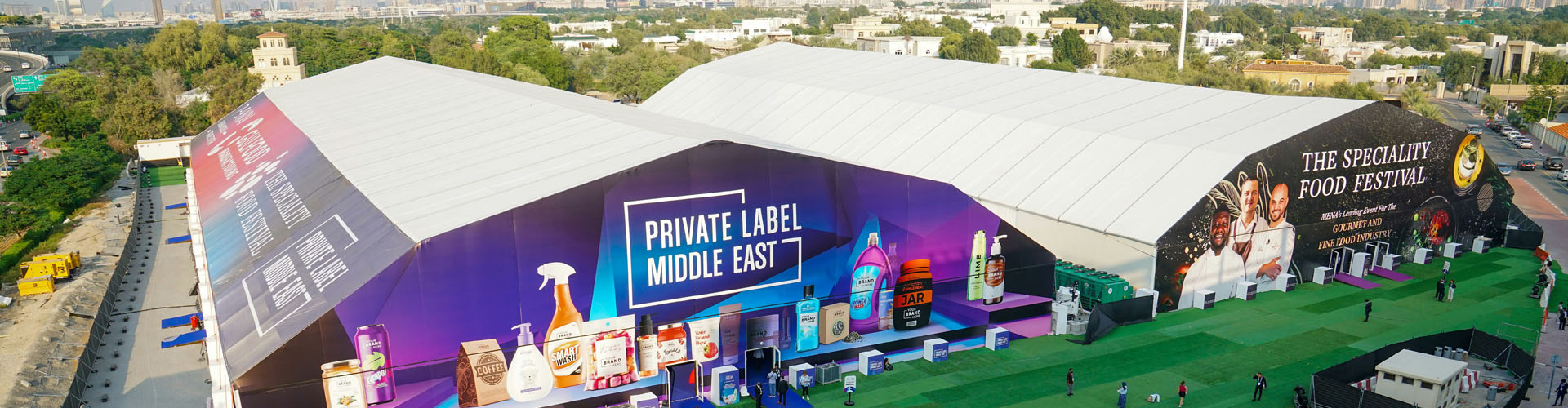
The versatility of the clear span tent makes it suitable for an extraordinarily broad spectrum of uses, spanning celebratory, commercial, industrial, and community-focused applications. Event organizers frequently deploy these tents for large gatherings, including dining functions, performance spaces, and exhibition shows, where the unobstructed floor plan lets them build custom layouts with stages, dance floors, display booths, and seating arranged in nearly any configuration. For market-style events, the open space allows vendors to set up stalls without awkward gaps caused by support poles, and wide central aisles keep foot traffic moving smoothly between displays. In industrial settings, these tents serve as temporary covered work zones, storage enclosures for materials, and protected areas for equipment maintenance when permanent buildings are unavailable or undergoing renovation. Teams can roll vehicles, machinery, and large cargo directly into the space because there are no internal posts to block access, and the shelter shields work crews and inventory from direct sun and light precipitation. Community groups use clear span tents for outdoor education programs, emergency staging areas, and seasonal gathering spaces, as the structures can be erected quickly in open fields, parking lots, or greenspaces. Sporting activities also benefit from this shelter style, offering shaded or covered areas for athlete check-in, spectator seating, and equipment storage beside outdoor competition venues. Some users combine multiple clear span tents connected by covered walkways to create linked zones, separating different functions while keeping all areas protected from the elements. The ability to customize length by adding modular frame sections means the tent can be scaled up for very large crowds or scaled down for smaller groups, making it adaptable to changing needs from one use to the next. After the event or project concludes, the whole system can be taken apart and transported to a new location for another purpose, extending its value across many different scenarios over time.
Interior customization options for a clear span tent go far beyond just choosing fabric color, allowing users to tailor the environment to match the tone and functional needs of whatever activity takes place inside. Lighting systems integrate smoothly into the open framework, since overhead beams run continuously along the perimeter and roof lines without poles blocking light placement. Users can suspend string lights, spotlights, diffused overhead panels, and stage lighting directly from the frame, designing layered lighting schemes that illuminate specific zones or create soft ambient atmosphere throughout the whole space. Audio equipment, projection screens, and hanging signage can also be mounted to the roof beams, which eliminates the need for separate freestanding truss systems in many cases. Flooring is another popular upgrade, with interlocking floor panels, carpet sections, and raised platform systems laid over the ground surface to cover uneven terrain, protect footwear from mud, and create a cleaner, more finished appearance. Door configurations can be adjusted to suit traffic flow, with wide roll-up openings for vehicle access, standard zippered pedestrian doors, and screened panels that let fresh air pass through while keeping insects out. Interior drapery and ceiling liners transform the utilitarian look of the tent fabric, softening acoustics, hiding hardware and frame elements, and adding a polished aesthetic suited for formal events. Acoustic treatments are particularly useful because large empty fabric spaces tend to echo sound; adding absorbent liners reduces reverberation and makes speech and music clearer for everyone inside. Utility accessories include cable channels that run along frame members to keep power cords organized and secured out of walkways, reducing trip hazards. Even interior partitioning can be added when separate smaller rooms are needed, using lightweight divider panels that attach to the main frame without drilling or permanently altering the tent structure. All these custom additions work within the open interior concept, enhancing the space without reintroducing the vertical support barriers that the clear span design was built to eliminate.
Transportation and storage are practical factors that set clear span tents apart from permanent buildings and even some other large temporary structures, because the entire system breaks down into discrete, manageable components. The metal frame sections are tubular and uniform in shape, designed to nest or stack neatly inside transport containers, while the fabric is rolled carefully rather than folded tightly to prevent permanent creasing and material fatigue. Hardware pieces such as buckles, bolts, and tension straps are usually sorted into labeled storage bags so that nothing goes missing between uses, as a small missing connector can slow down assembly significantly. Even though the individual parts are sturdy, they remain light enough for teams of workers to lift and move without heavy lifting machinery in most situations, which means the tent can be delivered to remote sites where large construction equipment cannot easily reach. When packed, the full tent occupies a fraction of the space it covers when assembled, so multiple tent systems can be stored in a modest warehouse or storage facility between bookings or projects. Care during transport matters a great deal; fabric must be kept away from sharp metal edges and abrasive surfaces that can create tiny tears that worsen under tension later on. Frame tubes should not be dropped or dragged across hard surfaces, as dents and bends can prevent sections from locking together properly and compromise the structural integrity of the frame. Before packing away after use, every part should be cleaned and fully dried. Storing damp fabric promotes mold growth, which weakens the synthetic fibers and leaves persistent discoloration and odors that are difficult to remove. Following consistent cleaning and packing routines extends the usable life of every component and ensures that the tent is ready for reliable setup at the next location. This portability is a core advantage for users who need covered space at rotating sites, rather than a fixed shelter that stays in one place year-round.
Safety practices for clear span tent use center on thoughtful planning, careful observation during occupancy, and strict attention to load limits and structural condition. Everyone working with these structures should recognize that they are temporary engineered systems, and they perform correctly only when assembled exactly according to the intended connection pattern and anchoring plan. Altering the frame by removing sections, cutting fabric, or substituting different hardware can create hidden failure points that are not visible from a casual glance. Occupancy planning accounts for the wide-open interior; even though there are no poles blocking movement, clear exit paths must be maintained at all times, and these routes cannot be blocked by stacked supplies, seating, or equipment. Ventilation management ties closely to safety when heating or cooking equipment is used inside, as burning fuel consumes oxygen and can produce invisible harmful gases that collect in enclosed spaces. Adequate airflow must be maintained whenever heat sources run, and heat equipment should always be positioned away from fabric walls and liners to avoid contact damage. Regular inspections are necessary throughout the time the tent is in use. Inspectors check anchor tension, frame joints, fabric condition, and sidewall attachments, especially after shifts in weather such as strong wind or heavy rain. Any signs of excessive fabric vibration, bent frame pieces, pulled anchors, or rips in the covering require immediate response, which may include reducing wind load by opening sidewalls or evacuating the space if conditions continue to worsen. Fire safety steps include keeping open flame sources at a safe distance from fabric surfaces and maintaining easily accessible extinguishing tools nearby. Staff assigned to monitor the space should know how to recognize warning signs of structural stress and understand the procedures to follow if conditions become unsafe. Safety is not a one-time check completed at setup; it is an ongoing responsibility that continues for as long as people or valuable assets remain under the tent’s cover.
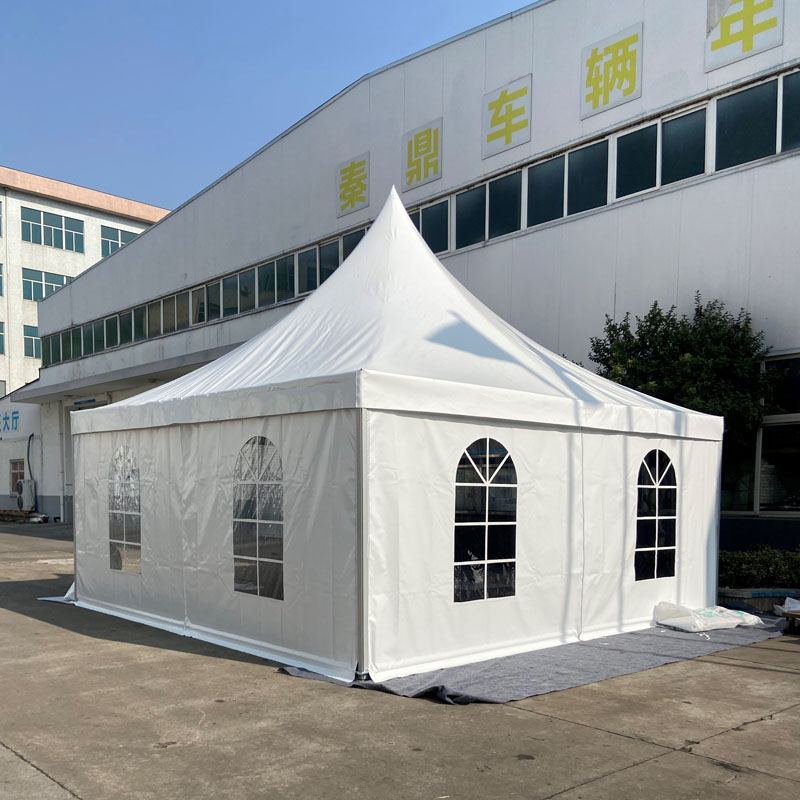
Comparing clear span tents to other types of temporary shelter helps highlight their unique strengths and also makes it easier to understand situations where alternative designs may be a better fit. Traditional pole tents rely on a grid of internal poles connected by cables, and they are often more affordable and lighter for smaller coverage areas, but those poles split up the interior and restrict layout freedom. Frame tents use external perimeter frames with fewer internal supports, yet they still incorporate some vertical posts spaced across the floor, which limits where large objects can be placed. Pop-up canopy structures are fast to erect and compact, but they are built for smaller areas and light-duty use, lacking the load capacity to span very wide distances or endure sustained wind exposure. Clear span tents occupy the space where maximum open width and heavy-duty performance are priorities, accepting the tradeoff of longer assembly time and larger component sets compared to simple canopies. They also differ from permanent buildings in that they do not require foundational construction, concrete pouring, or permanent site modifications, which reduces lead time and leaves the original ground surface unchanged after removal. However, they cannot match the insulation, security, and year-round ruggedness of a fixed building, and they remain sensitive to extreme weather that permanent structures are built to resist. For users weighing choices, the decision often comes down to whether unbroken interior space is the top priority. If the planned activity can work around internal support posts, a simpler tent style may serve well. If the core requirement is a wide, clear area free of obstructions, the clear span design becomes the logical selection. Understanding these distinctions helps buyers and renters set realistic expectations about installation effort, performance boundaries, and what the shelter can deliver for their specific project or event.
Looking ahead, the design of clear span tents continues to evolve as material science and fabrication methods advance, refining performance while preserving the core idea of an unobstructed covered span. New synthetic fabric blends offer improved stretch resistance, better heat reflection, and increased resistance to abrasion without adding significant weight to the covering. Frame manufacturing techniques create stronger alloy tubing with thinner wall profiles, cutting down overall weight while maintaining the strength required to carry roof loads across wide spans. Connection systems are also being refined, with faster-locking joints that reduce assembly time and lower the chance that installers will leave a fitting partially secured. Digital planning tools help users visualize interior layouts before setup, mapping lighting, seating, equipment, and traffic flow inside the empty tent footprint long before components arrive on site. These tools make it easier to test multiple layout concepts and spot potential issues before construction begins. Sustainability has also become a focus for many in the industry, with fabric formulations that degrade more gently at the end of service life and frame materials designed for easy recycling. Reusability remains the most meaningful sustainable feature of the tent format, as a well-cared-for clear span system can serve dozens of projects over many years instead of being discarded after a single use. As demand grows for flexible, relocatable covered space for events, temporary work sites, and community response needs, the clear span tent stays relevant because it solves a persistent problem: creating large, protected, open space quickly on sites where permanent construction is not feasible. The fundamental appeal never shifts: a broad roof held up from the edges only, leaving everything underneath open and ready to adapt to whatever purpose the people using it imagine. This simple, powerful concept will keep this style of temporary shelter a staple solution for anyone who needs to turn an open outdoor location into a functional, protected environment without sacrificing an inch of usable interior room to support poles.
Expo Tent is a marquee manufacturer from china, marquee tents have become indispensable temporary shelter solutions for various outdoor activities, featuring diverse types, flexible customization, and outstanding practical advantages. Fully customizable to meet personalized demands, these tents support adjustable sizes, diverse color schemes, printed brand logos, and matched functional accessories like transparent windows, insulated linings, and waterproof sidewalls, perfectly adapting to weddings, trade shows, sports events, and corporate gatherings. Beyond flexible design, they boast remarkable strengths: premium waterproof, UV-resistant and flame-retardant materials ensure stable performance in changing weather, while lightweight aluminum frames enable quick assembly, disassembly and convenient transportation. With spacious unobstructed interior, excellent durability and cost-effectiveness, marquee tent delivers reliable, flexible and economical temporary space solutions for both commercial and personal outdoor scenarios.