
 Global
PVC Transparent Tent, waterproof & UV resistant clear PVC marquee for wedding, party & exhibition. Custom sizes, aluminum frame, factory direct supply.
PVC transparent tent is a kind of temporary enclosure structure made mainly of transparent PVC fabric and supporting frames. It is designed to create a sheltered space while retaining light transmission and visual openness, which makes it different from conventional opaque fabric tents. This type of tent can be quickly assembled and disassembled, with flexible size options to adapt to diverse temporary and semi-permanent usage scenarios.

The PVC transparent tent takes transparent PVC membrane material as its core cladding material, matched with rigid supporting frameworks to form a stable covered space. Balancing the basic shelter function of tents and the transparent visual effect, it allows natural light to enter the interior and maintains a clear view between inside and outside. Its overall design focuses on mobility and reusability. Unlike fixed buildings, it does not require permanent foundation construction and can be relocated after disassembly. The service life varies depending on the usage environment and maintenance frequency, and the material itself can withstand common outdoor weather conditions under proper protection.
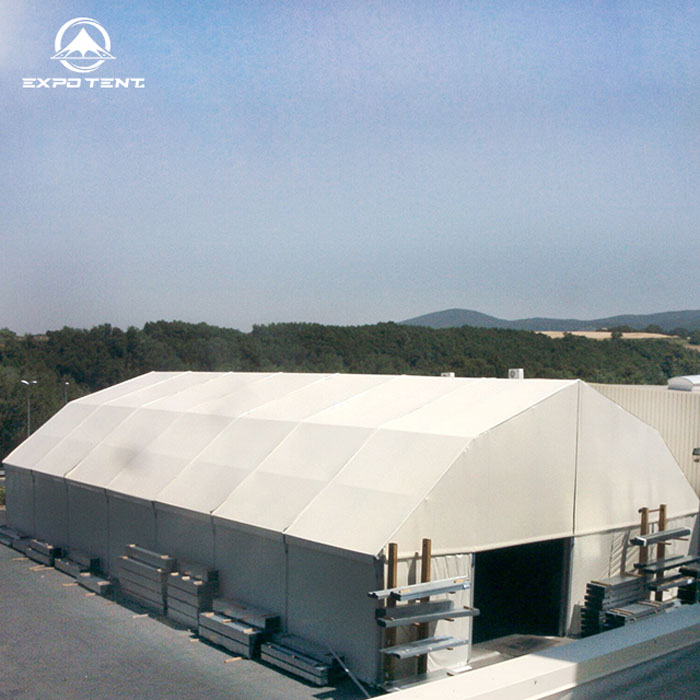
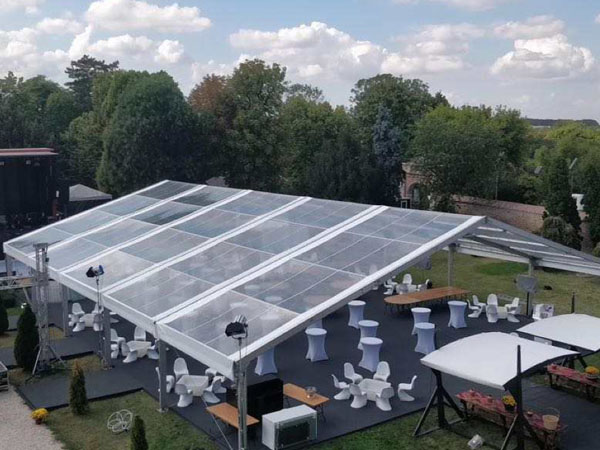
PVC transparent tents can be divided in multiple ways according to structural form and application style. By shape, there are arched transparent tents, gable-shaped transparent tents and polygonal transparent tents. Arched types feature smooth curved surfaces and good stress distribution, while gable-shaped ones have straight side walls and vertical end faces for easier internal layout. By space type, they include single-span transparent tents and multi-span combined transparent tents. Single-span models are independent units with simple construction. Multi-span types connect multiple single units side by side to expand the covering area continuously. By transparency layout, full-transparent tents use transparent PVC for all surrounding and top fabrics, and mixed transparent tents combine transparent PVC panels with matte PVC sections, reserving partial opaque areas for privacy or shading demands.
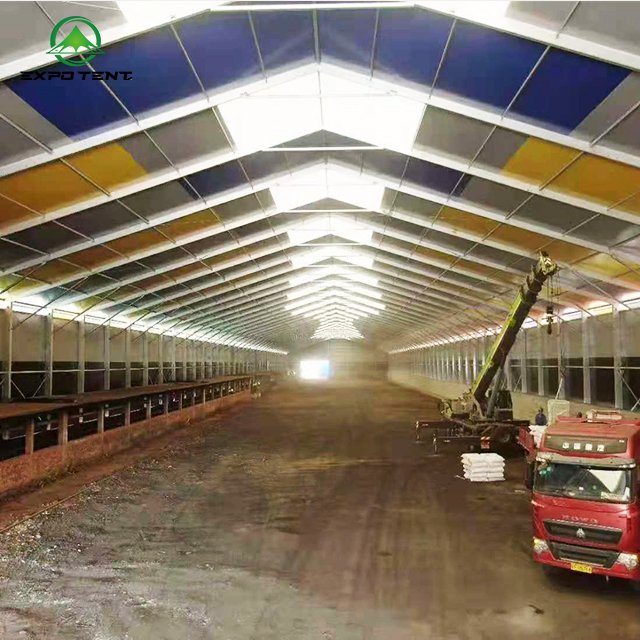
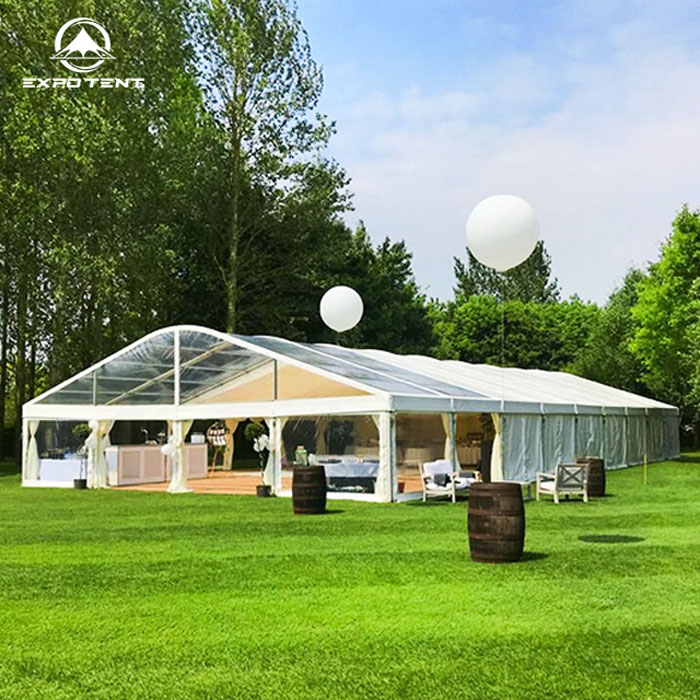
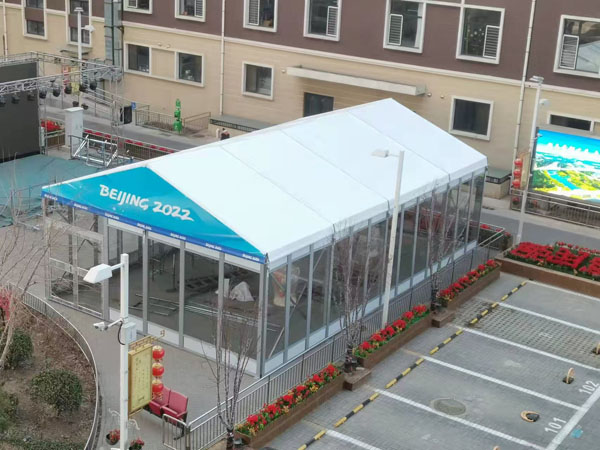
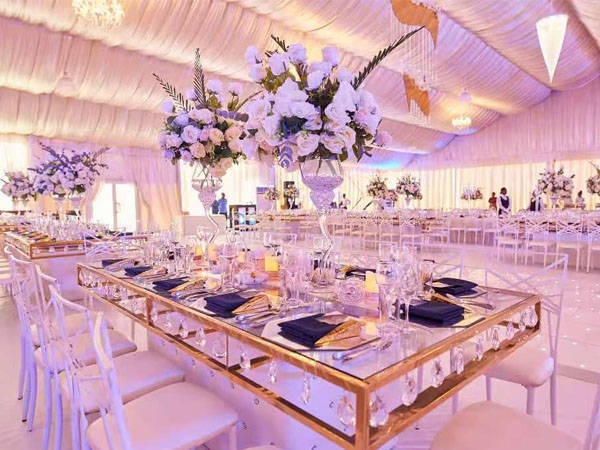
PVC transparent tents have a wide range of application scenarios. They are widely used for outdoor banquet activities, exhibition spaces and product display areas, where transparency helps show the interior layout and exhibits to passers-by. They can also serve as temporary waiting zones, dining spaces and rest areas for outdoor commercial activities. In recreational scenarios, these tents build semi-open viewing areas for outdoor performances and sports events. They can also act as temporary isolation or buffer shelters, providing windproof and rainproof conditions without completely blocking sightlines. In some cases, they are used as seasonal planting protection shelters or temporary storage spaces for goods that need light observation.
Light transmission is the most prominent feature of PVC transparent tents. The transparent PVC fabric lets natural light penetrate, reducing the demand for artificial lighting during daytime and creating a bright interior environment. The fabric has good flexibility and tensile performance, and can be tightly stretched on the frame to keep the surface smooth. The tent system has excellent mobility. All components are modular, so disassembly, transportation and re-installation can be completed repeatedly. The enclosure surface can block rain and wind, and the material surface is easy to wipe and clean. It can be customized in dimensions and proportions to fit different site spaces. Meanwhile, the transparent membrane material has certain flexibility against impact, and the whole structure will not produce hard fragments when accidental deformation occurs. Users can choose different light transmission levels of PVC materials according to whether they need soft light or high visibility.
The main structure is the load-bearing skeleton supporting the whole tent. It is assembled from standardized metal profiles, including main beams, vertical support columns, cross braces and diagonal bracing parts. All connecting joints adopt matched connecting accessories to lock each component firmly. Vertical columns transfer the vertical load from the roof and fabric downwards to the ground. Main beams bear the tension force from the stretched PVC fabric and form the outline of the roof. Cross braces and diagonal braces are installed between columns and beams to enhance the overall rigidity and resist lateral force. All structural components are made into unified modular sizes. The connection mode avoids complicated on-site welding work. The frame can be adjusted in height and span within a reasonable range, and extra reinforcing components can be added for large-span models to maintain structural stability.
The PVC fabric enclosure consists of transparent PVC top covers and side wall panels, which form the closed boundary of the tent space. The fabric is cut according to the measured size of the frame, and the splicing positions are processed by thermal welding to form integrated seams, avoiding water leakage at stitching points. Side wall panels can be designed as fixed type or detachable type. Detachable side walls can be partially or fully rolled up or removed, converting the closed space into an open semi-outdoor area. The edge of each PVC fabric is equipped with reinforced binding strips and fixing loops, which are used to fasten the fabric onto the frame and keep proper tension. Some sections can be reserved for door openings. The matching transparent PVC door curtains or zipper doors can be installed at these positions. The surface treatment of the PVC material helps reduce dust adhesion and slow down the aging speed under long-term sunlight exposure.
A complete PVC transparent tent is equipped with a series of supporting accessories to improve comfort and usability. Sealing strips are arranged at the joints between fabric and frames to reduce air leakage and rain penetration. Ground fixing accessories are used to anchor the whole tent to the ground, improving resistance against wind. Optional supporting parts include internal lighting suspension kits, internal curtain tracks and internal partition components. Drainage accessories are installed along the edge of the roof to guide rainwater to the designated drainage points and prevent water accumulation on the top fabric. For scenarios requiring temperature adjustment, auxiliary hanging structures can be fitted inside to place air circulation equipment. Protection accessories can also be selected to reduce long-term ultraviolet impact on the transparent fabric when the tent is used in open areas for a long time.
The installation work starts with site leveling. The ground should be flat and stable to provide a reliable foundation for the frame. Workers assemble the main frame modules step by step according to the assembly sequence, fixing columns and beams first, then installing the bracing components to lock the whole skeleton. After the frame inspection, the PVC fabric is unfolded and hung on the frame. Fixing points are fastened in sequence to stretch the fabric evenly and avoid local sagging or excessive tension. Then side wall panels, doors and all supporting accessories are installed. Finally, ground anchoring work is completed. The whole installation process follows modular assembly logic. Corresponding disassembly work reverses the above steps. It is recommended to check the fabric surface and connecting fittings regularly during use, and remove accumulated dirt and sundries on the roof in time.
Routine maintenance is essential to extend the service cycle of PVC transparent tents. The transparent fabric should be cleaned with soft cleaning tools and mild cleaning materials. Hard sharp tools and strong corrosive cleaners are forbidden to avoid scratching or damaging the membrane surface. Users should inspect connecting fittings, frame surfaces and fabric seams regularly. Loose fasteners need to be tightened in time, and damaged fabric sections can be repaired with matching repair materials. When not in use for a long time, all components should be cleaned, dried and stored in a dry and ventilated environment. If structural accessories or PVC fabric are damaged and cannot be repaired, replacement parts can be supplied according to the original module specifications. Professional guidance can be provided for maintenance, replacement and re-assessment of usage conditions after long-time use. Timely maintenance can keep the light transmission performance and waterproof performance of the transparent tent in good condition.
Expo Tent is a marquee manufacturer from china, marquee tents have become indispensable temporary shelter solutions for various outdoor activities, featuring diverse types, flexible customization, and outstanding practical advantages. Fully customizable to meet personalized demands, these tents support adjustable sizes, diverse color schemes, printed brand logos, and matched functional accessories like transparent windows, insulated linings, and waterproof sidewalls, perfectly adapting to weddings, trade shows, sports events, and corporate gatherings. Beyond flexible design, they boast remarkable strengths: premium waterproof, UV-resistant and flame-retardant materials ensure stable performance in changing weather, while lightweight aluminum frames enable quick assembly, disassembly and convenient transportation. With spacious unobstructed interior, excellent durability and cost-effectiveness, marquee tent delivers reliable, flexible and economical temporary space solutions for both commercial and personal outdoor scenarios.