
 Global
Shop durable pavilion tent for trade shows, markets & promotions. Waterproof, UV resistant, custom printed canopy with fast setup. Multiple sizes available.
Pavilion tents are a widely adopted temporary fabric building solution that balances flexible space arrangement and reliable weather protection. Different from lightweight pop-up canopies, this type of tent is designed for relatively long-time deployment and can form a complete enclosed or semi-enclosed activity area. It has become a common option for outdoor space expansion across many scenarios due to its modular layout and convenient assembly.

A pavilion tent refers to a modular shelter built with rigid frame components and flexible fabric cladding. It creates a clear, open inner space without fixed permanent foundations. The core design idea is to deliver usable covered space that can be relocated after use. Its overall scale varies greatly, from small single-unit pavilions for several people to large combined structures covering hundreds of square meters. The whole set is prefabricated, which means most parts are processed in advance and only require on-site splicing instead of complex casting or masonry work.
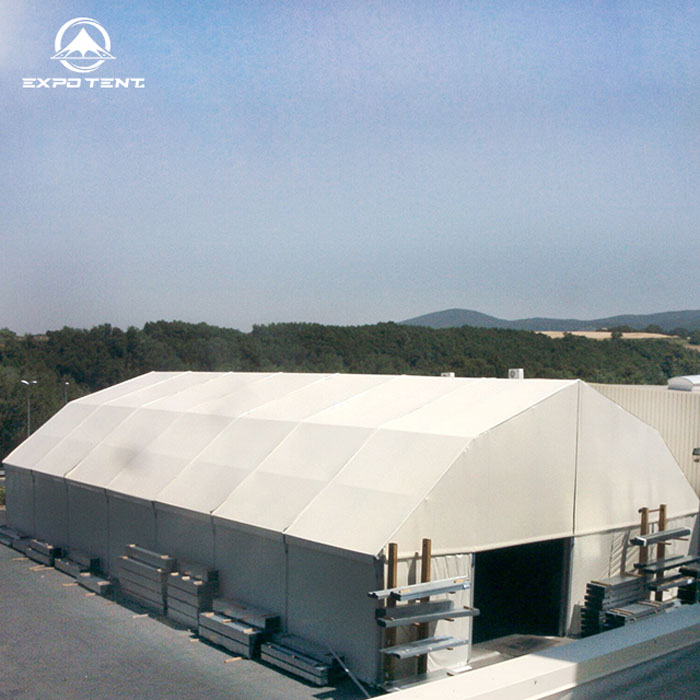
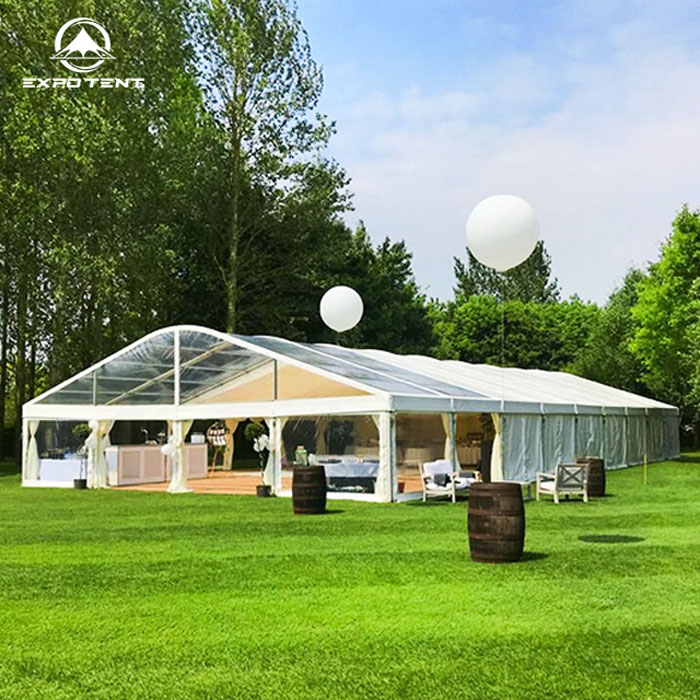
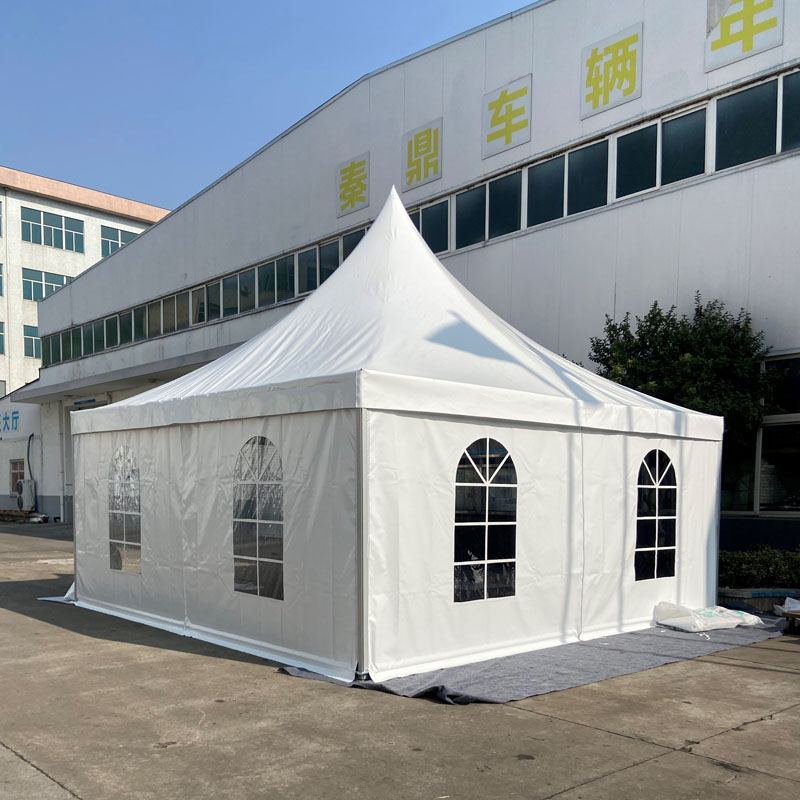
Pavilion tents can be grouped in several practical ways according to application and structural style. By shape, there are gable roof pavilion tents, arched roof pavilion tents and multi-sided polygonal pavilion tents. Gable styles feature straight roof slopes and neat side walls, which are easy to connect into long continuous spaces. Arched styles have smooth curved tops and perform well in shedding accumulated rain and debris. By enclosure form, they are divided into open-sided pavilions, semi-enclosed pavilions and fully enclosed pavilions. Open-sided ones keep natural ventilation and wide views, while fully enclosed versions form independent sealed rooms. They can also be sorted by single-span width, with narrow-span types for small gatherings and wide-span types for large-area centralized activities.
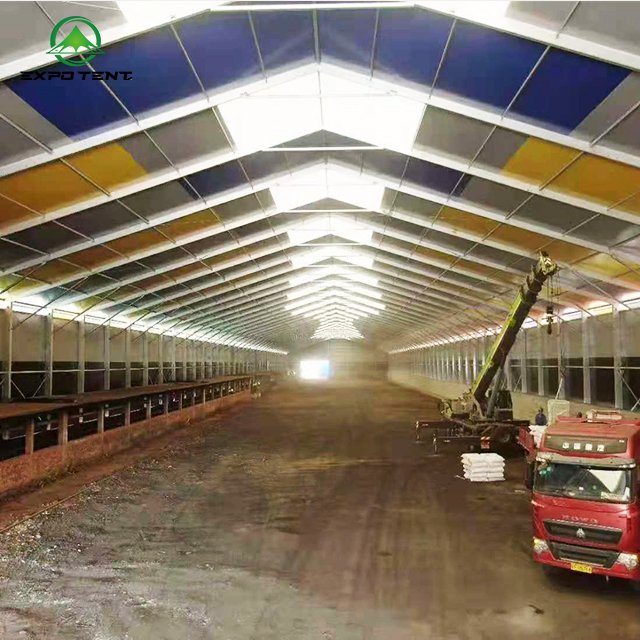
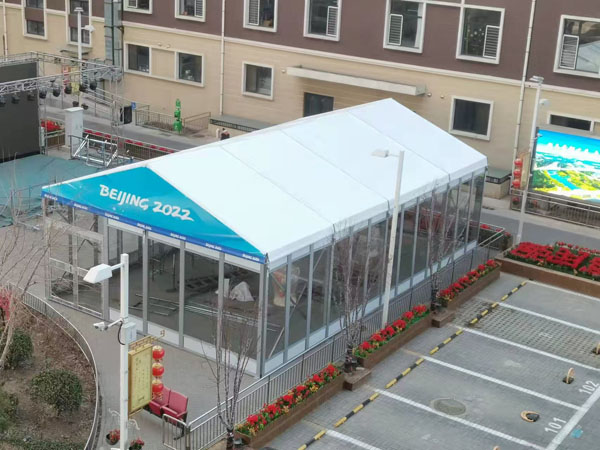
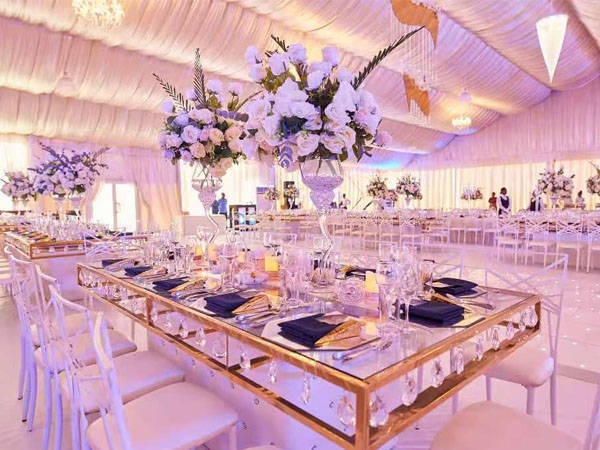
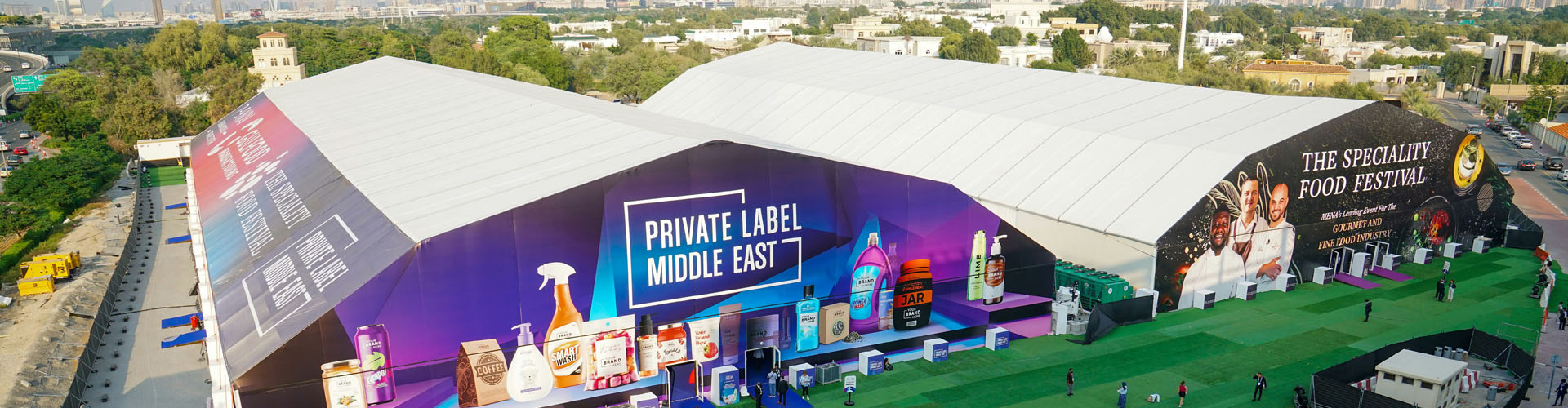
The usage scenarios of pavilion tents cover many temporary and semi-temporary activity demands. They are frequently arranged for outdoor exhibitions, product displays and temporary reception zones. Catering and banquets also make good use of them to create independent dining spaces away from open weather. In sports and leisure fields, they serve as rest shelters, temporary spectator zones and activity venues for group events. In logistics and storage, they can act as short-term material storage areas and sorting shelters. Besides, they are suitable for temporary work stations, medical screening zones and community public activity spaces. When the original building space is insufficient, pavilion tents can quickly add extra usable areas without altering existing buildings.
One prominent feature of pavilion tents is mobility. The whole structure can be disassembled, transported and reassembled at new sites repeatedly. Modularity is another important trait: single units can stand alone or be linked together horizontally to expand space according to actual needs. They have strong adaptability to flat ground and can be set up on lawns, pavement and compacted ground with proper anchoring. Compared with permanent buildings, they take much shorter time to finish installation. Meanwhile, they support flexible configuration, where users can choose to add or remove side curtains, doors and windows based on whether privacy or ventilation is prioritized. Their appearance can also be adjusted through fabric colour and surface printing to match event themes.
The main frame forms the load-bearing skeleton of a pavilion tent and bears forces from wind, fabric tension and top loads. It is assembled from standardized straight and curved profile members. Vertical uprights transfer vertical loads down to ground anchoring points. Horizontal beams connect uprights and support roof purlins, while diagonal bracing pieces are installed between beams and uprights to improve lateral stability and resist horizontal wind force. All connecting joints use matching connectors to lock components tightly. No on-site welding is required. The spacing between uprights and purlins follows structural design to ensure even force distribution. The frame system can keep the outline stable after assembly and maintain the designed inner headroom without middle support poles that block activity space for wide-span models.
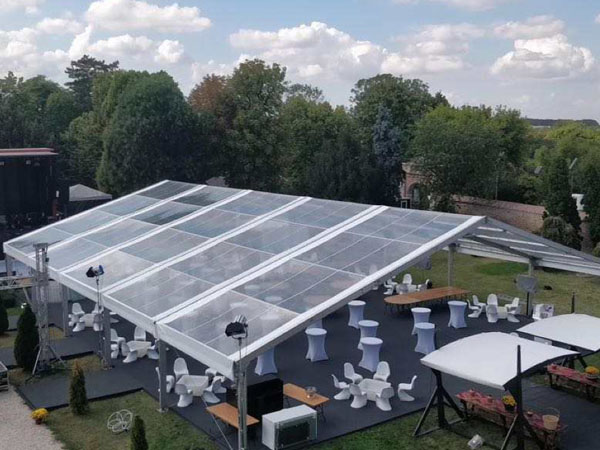
The fabric enclosure includes roof fabric and side wall fabric, which form the weather barrier of the pavilion tent. The roof fabric is the core waterproof layer, stretched tightly over the frame to avoid excessive sagging and ponding. Side fabrics can be fixed or rollable. Rollable side curtains can be rolled upward partially or fully to open the space for airflow. The fabric material is selected to resist sunlight exposure and water penetration. Sewing and heat sealing processes are applied at seams to reduce water leakage risks. Transparent fabric sections can be embedded in side walls if natural light inside the tent is required. Fasteners along fabric edges cooperate with frame accessories to fix the fabric and keep proper tension. The fabric can be detached separately from the frame for cleaning, replacement or storage when not in use.
A complete pavilion tent set contains multiple supporting accessories to enrich functions. Ground anchoring components secure the whole tent to the ground and prevent shifting or overturning under wind. Interior supporting options include lighting systems, wiring ducts and power distribution accessories for illumination and equipment use. Flooring modules can be laid inside to create flat, clean walking surfaces when the original ground is uneven or damp. Door units of different sizes can be fitted, including single doors, double doors and wide passage doors for people or small carts. Ventilation accessories such as circulation vents can be installed on roof or side fabric to improve air exchange. Curtain rails, inner partition fabrics and sign hanging fittings are also common supporting parts for space division and layout decoration.
Installation starts with site preparation. The ground should be leveled and checked to confirm suitable anchoring conditions. Frame components are sorted by type first, then uprights, beams and bracings are spliced step by step to form independent frame units. After the frame skeleton is fully connected and calibrated for verticality and levelness, roof fabric is spread and fastened onto the roof frame. Side fabrics, doors and transparent panels are mounted afterwards. Anchoring parts are then installed and tensioned to lock the tent to the ground. Auxiliary systems including lights and flooring are arranged in the final stage. During assembly, tension of fabric and tightness of connectors are adjusted repeatedly. Disassembly follows the reverse sequence: remove auxiliary accessories first, release fabric tension, take off enclosure fabrics, and then disassemble frame members for packaging and transportation.
Routine after-sales content focuses on technical guidance and component supply. Guidance covers correct disassembly, storage and regular inspection methods for users. Inspection suggestions include checking frame connectors for looseness, fabric for tearing or ageing marks and anchoring parts before each reuse. Spare parts for frames, fabrics and connectors can be provided separately when damage occurs from long-term use. Service teams also offer consultation about re-layout and re-combination when users plan to move the tent or adjust its scale. Usage reminders are provided to help users make proper judgment on deployment duration and weather conditions. Maintenance advice helps extend the service life of both frame and fabric parts and keeps the tent in reliable working condition for repeated use.
Expo Tent is a marquee manufacturer from china, marquee tents have become indispensable temporary shelter solutions for various outdoor activities, featuring diverse types, flexible customization, and outstanding practical advantages. Fully customizable to meet personalized demands, these tents support adjustable sizes, diverse color schemes, printed brand logos, and matched functional accessories like transparent windows, insulated linings, and waterproof sidewalls, perfectly adapting to weddings, trade shows, sports events, and corporate gatherings. Beyond flexible design, they boast remarkable strengths: premium waterproof, UV-resistant and flame-retardant materials ensure stable performance in changing weather, while lightweight aluminum frames enable quick assembly, disassembly and convenient transportation. With spacious unobstructed interior, excellent durability and cost-effectiveness, marquee tent delivers reliable, flexible and economical temporary space solutions for both commercial and personal outdoor scenarios.