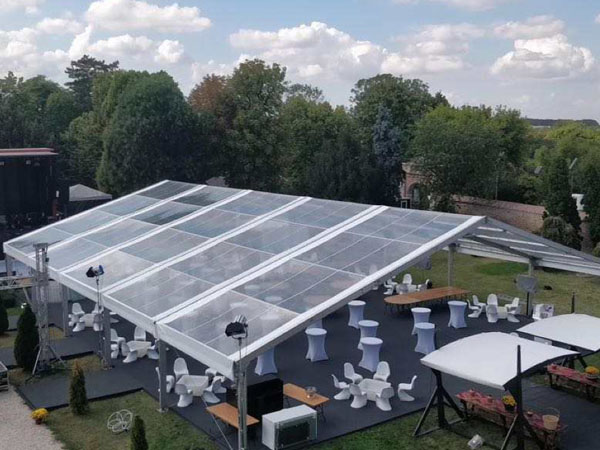

 Global
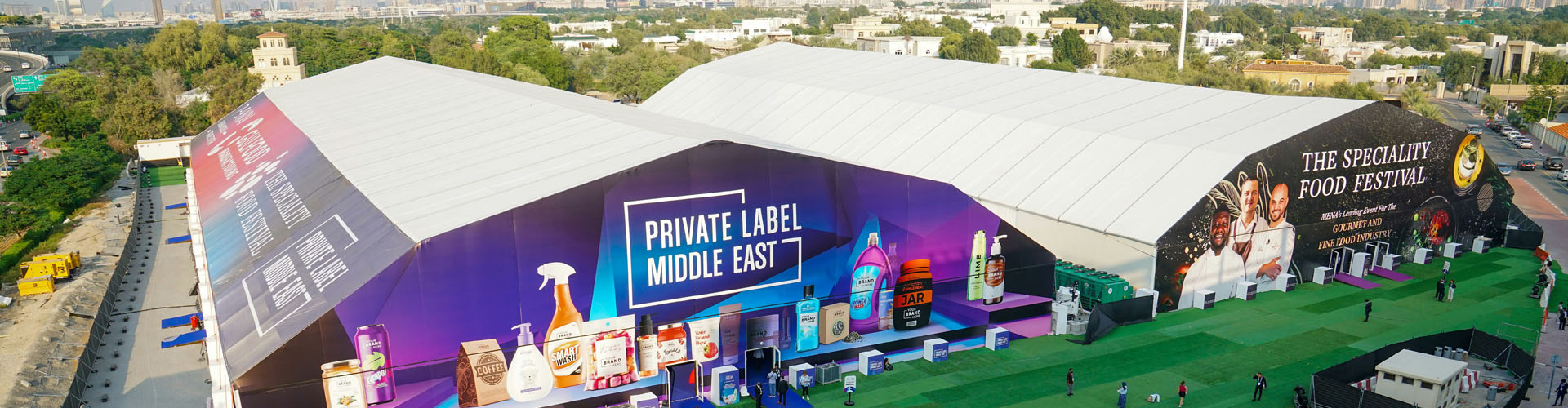
Custom Polygon Tent manufacturer. Modular polygonal aluminum shelter for festivals, stadiums & temporary storage. UV-resistant PVC, fast assembly, free design support.
Polygon tent is a type of modular temporary shelter defined by its multi-sided geometric outline, differing from conventional arched, rectangular or dome-shaped temporary tents. Its special polygonal layout delivers a balanced visual effect and stable mechanical performance, making it a flexible shelter solution for a wide range of outdoor and semi-outdoor scenarios. This article introduces the classification, application scenarios, core features, structural composition, fabric enclosure, supporting systems, installation process and after-service arrangement of polygon tents.
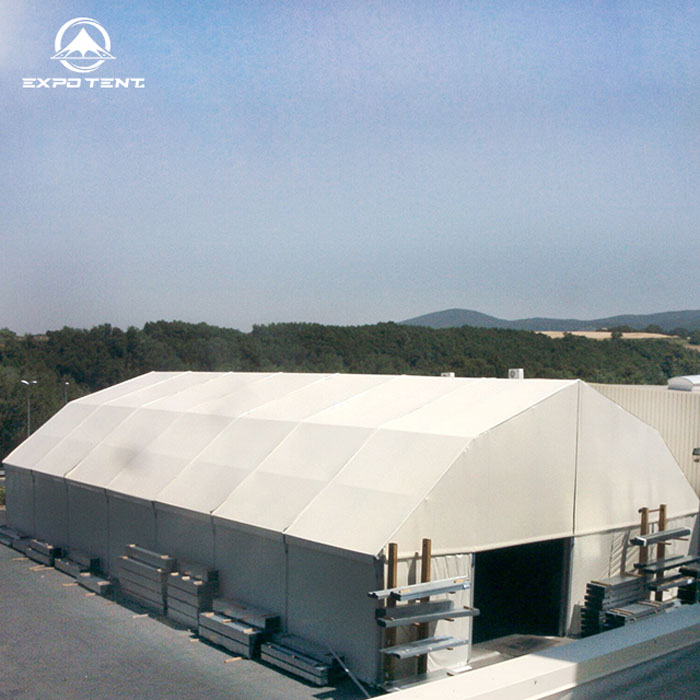
Polygon tents can be grouped according to their geometric form and assembly logic. Based on the ground plan shape, common types include hexagonal, octagonal, dodecagonal and combined irregular polygon tents. Single-unit polygon tents are built with one closed polygonal frame, suitable for independent small and medium spaces. Combined polygon tents connect multiple single units through connecting components to form a larger continuous space, and the overall shape can be adjusted by changing the number and arrangement of individual modules.
They can also be divided by load-bearing design. Light-duty polygon tents adopt thin-walled modular frames for short-term use in mild weather conditions. Heavy-duty polygon tents use reinforced connecting joints and thicker frame profiles to cope with longer service cycles and harsher external environments.
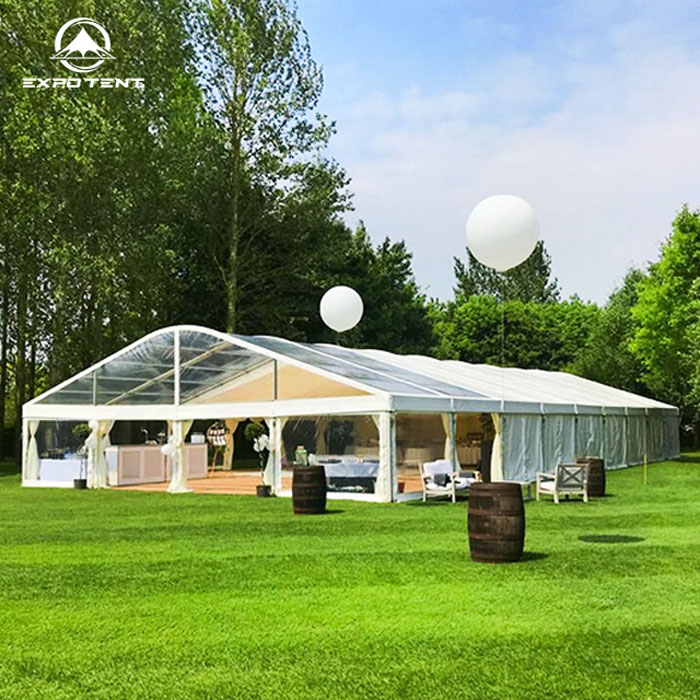
Polygon tents have broad application potential across diverse scenarios. In outdoor event activities, they serve as independent exhibition booths, reception lounges, catering areas and activity briefing zones. Their distinctive outline helps create a recognizable space atmosphere for commercial promotion and cultural activities.
For temporary operation spaces, these tents can act as temporary storage areas, on-site offices and rest shelters for field teams. They are also widely selected for recreational purposes, such as outdoor gathering spaces and activity lounges for campsites. Thanks to the modular design, the space scale can be expanded or reduced quickly to match changing usage demands.
The most prominent feature of a polygon tent lies in its geometric structure. The multi-angle frame evenly disperses external force, which helps improve the overall stability of the shelter. Compared with ordinary rectangular tents, polygon tents have no obvious stress concentration points on the frame under lateral force.
Modularity is another core advantage. All frame components and enclosure parts are produced in unified specifications. Damaged parts can be replaced separately without taking apart the whole tent. The disassembly and transportation process is convenient, and disassembled components occupy relatively small storage volume.
These tents also show strong adaptability. The interior space is open and free of intermediate supporting pillars, which facilitates flexible layout of furniture and equipment. The shape can be customized in terms of side count and size to fit special site layouts, and the enclosure fabric can be matched with different transparent, shaded or breathable materials as required.
The main body structure forms the load-bearing skeleton of the polygon tent. It consists of straight frame beams, corner connecting joints, bottom edge profiles and auxiliary diagonal bracing parts. Each corner joint connects multiple frame beams to lock the polygonal outline, and the precision of joints directly determines the assembly tightness and structural stability.
Frame beams are the basic force-bearing members. They are processed into fixed lengths to match the preset side length of the polygon. Diagonal bracing pieces are installed between the top and bottom frames to resist lateral loads and prevent frame deformation. The bottom frame forms a closed polygonal base, which can be fixed to the ground through anchoring accessories.
All structural components adopt a plug-and-lock connection mode. No complicated welding work is required on site. The whole skeleton is assembled piece by piece along the polygonal contour, and the frame forms an integrated self-supporting system after all joints are locked.
The tarpaulin enclosure covers the frame skeleton and creates the enclosed space of the tent. It includes roof tarpaulin, side wall panels and corner wrapping pieces. The roof tarpaulin is cut and sewn according to the top polygonal shape, with reserved fastening belts or sleeve structures to fit the top frame. It is designed with a certain drainage gradient to guide accumulated water to the edge and avoid ponding on the tarpaulin surface.
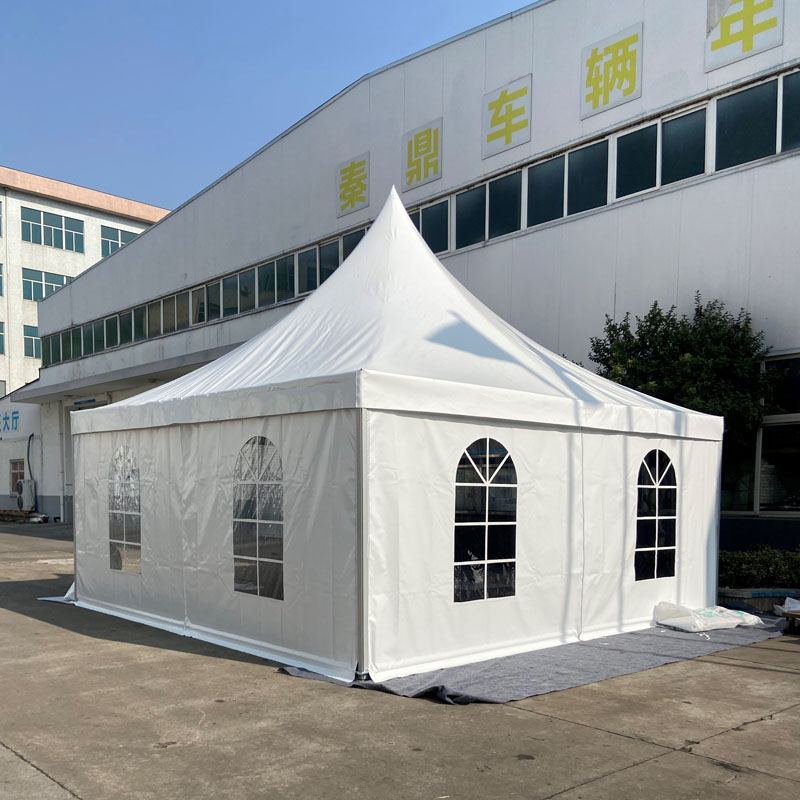
Side wall tarpaulins can be configured flexibly. Users can choose fully closed tarpaulins, tarpaulins with window openings, rolling-up curtain walls or transparent panel walls. Each side wall is equipped with connecting fasteners along the edge to connect with adjacent side walls and the bottom frame. Sealing strips are set at the splicing positions of tarpaulin pieces to reduce air and water penetration.
The tarpaulin material has good tensile performance and anti-aging property. The surface treatment helps resist ultraviolet radiation and dirt adhesion. Individual side wall modules can be removed separately to open part of the tent space without dismantling the whole enclosure.
A complete polygon tent is equipped with a set of supporting auxiliary systems to enrich its practical functions. Ground fixing accessories are essential, including ground stakes, tension belts and counterweight blocks, which are selected according to the site ground condition to fasten the tent base.
Lighting and wiring accessories can be arranged inside the tent. Cable fixing buckles are pre-reserved on the frame to arrange light strips and power lines neatly, avoiding messy wiring. Ventilation accessories such as exhaust windows and breathable mesh panels can be installed on side walls to adjust internal air circulation.
Other optional supporting parts include internal partition tarpaulins, door curtain assemblies and gutter accessories. Partition tarpaulins divide the inner space into independent functional areas. Gutter accessories are installed at the splicing positions of combined tents to collect rainwater and prevent leakage at connection gaps.
The installation of polygon tents follows a fixed sequential workflow. Before assembly, the site needs to be leveled and cleaned, and all components are sorted and checked against the component list.
The first step is to lay out the bottom frame. Frame beams and corner joints are connected in sequence to form the closed polygonal base, and temporary positioning is completed. Next, the vertical frame beams and top corner joints are installed to build the top skeleton, followed by the installation of diagonal bracing members to stabilize the three-dimensional frame.
After the whole skeleton is checked and adjusted, the roof tarpaulin is covered and fastened onto the top frame. Then side wall tarpaulins and corner wrapping pieces are installed and spliced. Finally, ground fixing parts are mounted, tension is adjusted evenly, and all connecting fasteners are rechecked to guarantee tight connection.
The whole operation can be finished by a small team. Special heavy construction tools are not required for standard assembly. When dismantling, the process is reversed, and all components are sorted and packed for storage or transfer.
Standard after-service support covers component guidance, replacement consultation and usage guidance. Users can obtain operation guidance for assembly, disassembly and daily maintenance. Guidance will be provided for regular inspection points, including checking joint tightness, tarpaulin wear and fixing accessory status.
When components are damaged in normal use, separate replacement of individual parts is available. Guidance on tarpaulin cleaning and storage methods is provided to extend the service life of enclosure materials. Professional suggestions will also be offered for adjusting the fixing scheme when the tent is relocated to a new site with different ground conditions.
Technical consultation is available for problems encountered during use. Maintenance reminders focus on regular visual inspection before each use, especially after long-term storage or exposure to severe weather. Proper daily maintenance can effectively keep the polygon tent in stable working condition for repeated deployment.
Expo Tent is a marquee manufacturer from china, marquee tents have become indispensable temporary shelter solutions for various outdoor activities, featuring diverse types, flexible customization, and outstanding practical advantages. Fully customizable to meet personalized demands, these tents support adjustable sizes, diverse color schemes, printed brand logos, and matched functional accessories like transparent windows, insulated linings, and waterproof sidewalls, perfectly adapting to weddings, trade shows, sports events, and corporate gatherings. Beyond flexible design, they boast remarkable strengths: premium waterproof, UV-resistant and flame-retardant materials ensure stable performance in changing weather, while lightweight aluminum frames enable quick assembly, disassembly and convenient transportation. With spacious unobstructed interior, excellent durability and cost-effectiveness, marquee tent delivers reliable, flexible and economical temporary space solutions for both commercial and personal outdoor scenarios.