
 Global
High-quality stock tents in stock for parties, markets & outdoor events. Heavy-duty, wind-resistant stock tents. Fast delivery & bulk options.
Stock tent refers to a type of pre-engineered temporary fabric building that is kept in ready-to-deploy inventory for rapid leasing or delivery. It is a flexible shelter solution built to fulfil short-notice space demands without lengthy custom design cycles. Unlike bespoke tent structures that are tailored one by one according to unique site requirements, stock tents adopt standardized dimensional specifications, making them widely adaptable for general scenarios.
A stock tent is a modular prefabricated shelter assembled from reusable metal frames and flexible fabric enclosures. All core components are produced in advance and stored as complete sets. Once a demand arises, the whole kit can be dispatched quickly. Its core design logic balances fast availability and basic structural reliability. It fills the gap between permanent buildings and small portable pop-up tents, offering a covered area with larger span and longer usable life for medium-term temporary usage. It can be disassembled, transported compactly and reused on different sites after finishing one deployment cycle.
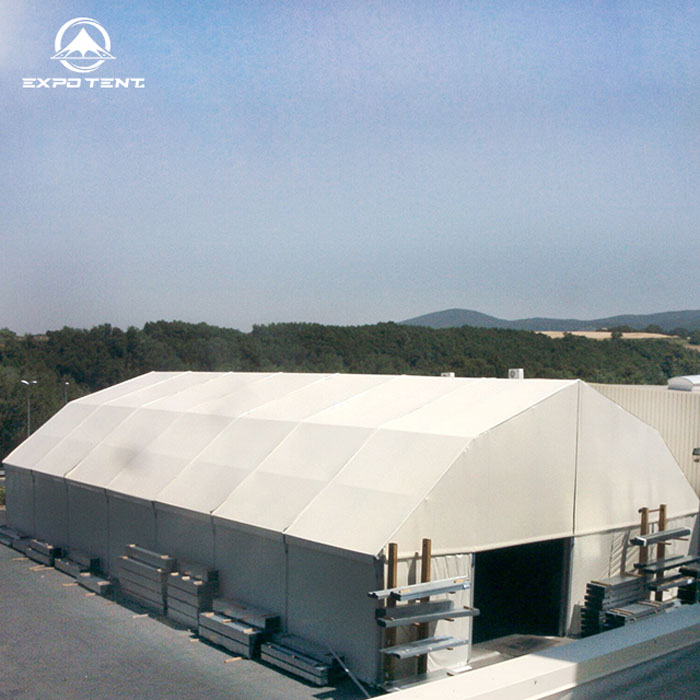
Stock tents can be sorted by several practical dimensions. Based on span style, there are single-span arched stock tents and straight-wall rectangular stock tents. Arched types feature curved rooflines and perform well in drainage and snow shedding. Straight-wall versions provide vertical interior walls, which is convenient for placing shelves and large equipment close to boundaries.
By expected service duration, they are divided into short-cycle stock tents and medium-term stock tents. Short-cycle ones target events lasting several days or weeks, with lighter frame configurations. Medium-term stock tents use thicker frame tubes and heavier fabric to support continuous use for multiple months.
In terms of base function orientation, common categories include general storage stock tents, activity shelter stock tents and transit workspace stock tents. Each category keeps the same modular assembly logic while adjusting partial accessory configurations.
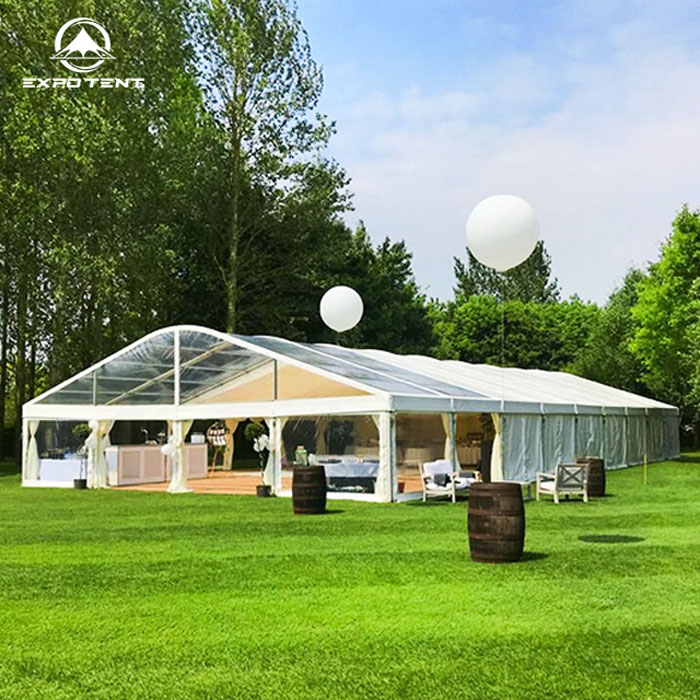
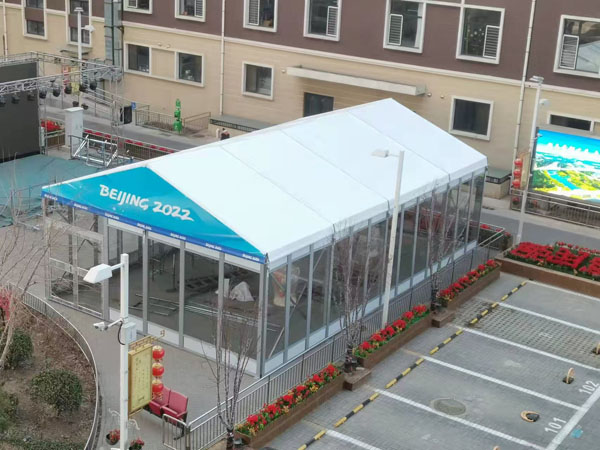
Stock tents serve a broad range of temporary space needs. The most frequent use is temporary storage, to cover raw materials, packaged goods, spare parts and finished products when indoor warehouse space is insufficient. They are also widely used as temporary activity venues for outdoor gatherings, exhibition zones and on-site staff rest areas.
On construction sites, stock tents act as temporary workshops, material buffer zones and site offices. In logistics scenarios, they work as loading and unloading awnings to shield cargo from direct sunshine and rain during transfer. They can also function as temporary isolation zones, equipment protection covers and seasonal overflow space when business volume surges in peak periods.
The most prominent feature of stock tents is rapid availability. Since all parts are pre-manufactured and kept in stock, lead time from order confirmation to shipment is greatly shortened. The modular design brings good mobility: all components can be taken apart into small packages suitable for land transport.
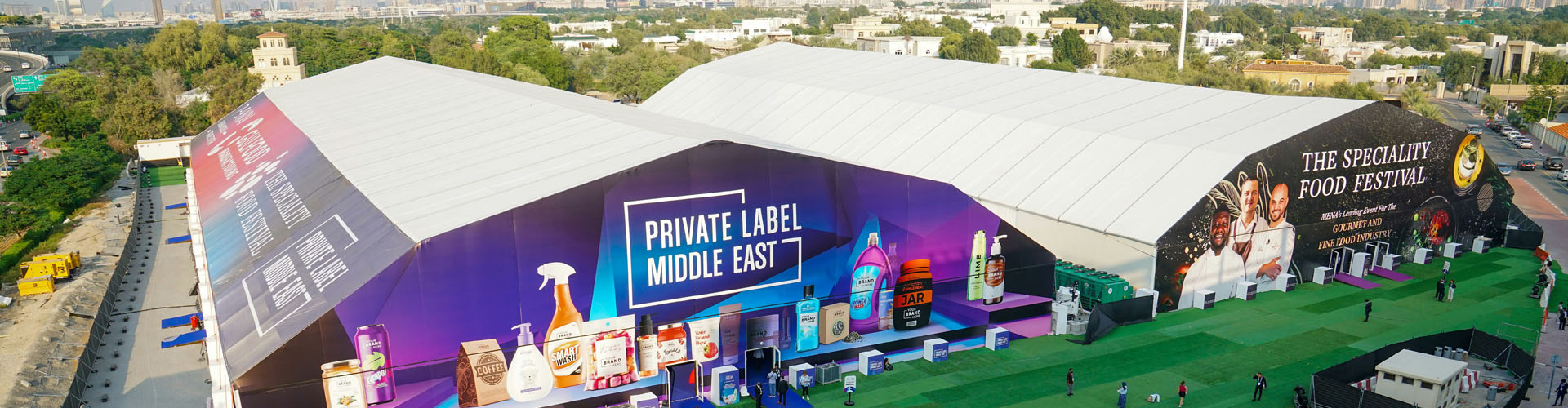
They deliver flexible layout adaptability. Multiple stock tent units can be connected side by side or end to end to expand the covered area. Compared with fixed buildings, they require no complicated foundation construction in most flat site conditions. Materials are reusable, so one tent set can support repeated assembly and disassembly across different locations. Meanwhile, the whole structure has adjustable accessories to improve comfort and environmental adaptability inside.
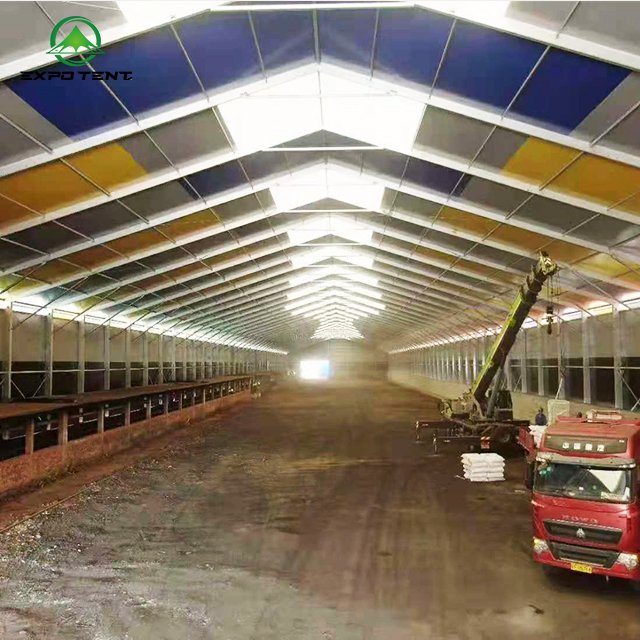
The main bearing system of a stock tent is composed of extruded metal alloy frames. The frame system includes vertical support posts, roof beams, arched rafters, horizontal bracing bars and diagonal tension members. All connecting joints use matched mechanical connectors such as bolts and clamping fittings.
The frames form the stable load-bearing skeleton and define the tent’s clear span, side height and ridge height. Bracing parts are installed between main frames to resist lateral force and maintain overall rigidity. The frame components are processed with surface treatment to reduce oxidation and abrasion during repeated handling. Each structural member is designed for easy alignment during on-site assembly, and no special welding work is required at the deployment site.
The fabric enclosure includes roof sheets, side wall panels and end gable panels. The fabric material has a multi-layer composite structure, with the core fabric substrate coated to gain water repellency, ultraviolet resistance and tear resistance.
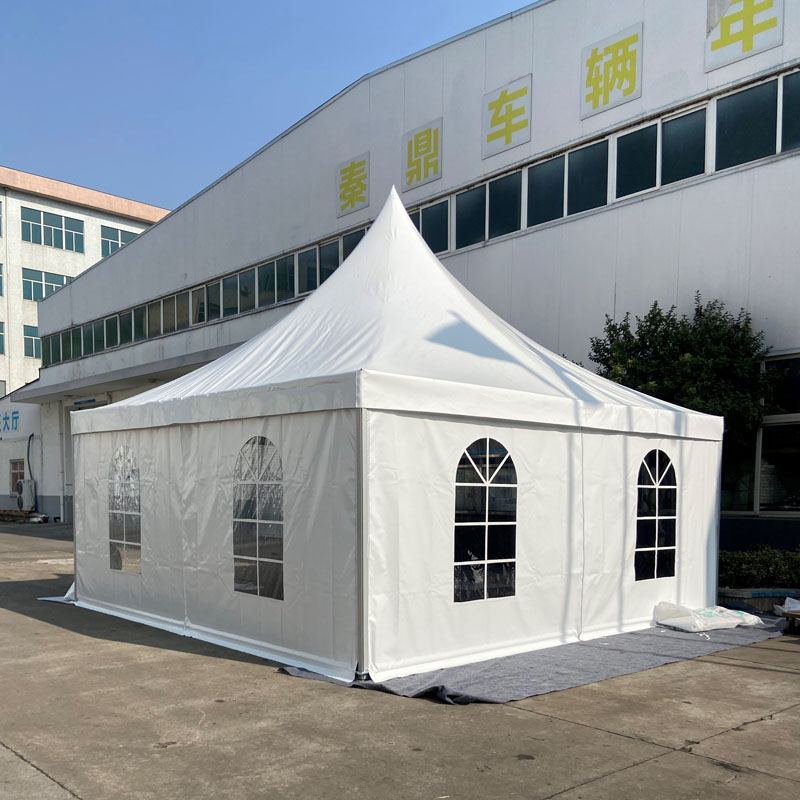
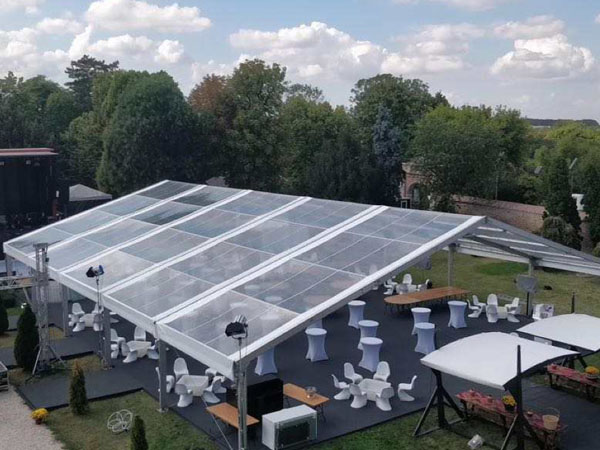
Different fabric options can be selected according to usage environments. Translucent fabric allows natural daylight to enter and reduces interior lighting demand, while opaque fabric provides shading and privacy. The fabric is fixed onto the metal frame through tensioning accessories. Proper tension keeps the surface smooth, prevents water ponding and reduces fluttering under wind. Zipped door openings and window cutouts can be prefabricated on side and end fabrics to meet access and ventilation needs.
A complete stock tent set contains multiple optional supporting systems to enrich its functionality. Ventilation accessories include exhaust fans, passive ventilation windows and air circulation ducts to regulate internal air flow. Lighting systems consist of suspended light fixtures and wiring tracks arranged safely along frame beams.
Ground accessories include floor mats, ground anchor kits, ballast weights and edge sealing strips. Door systems cover roll-up fabric doors, zipper access doors and hard panel entry doors. For temperature management, optional shading layers and simple thermal insulation liners can be added. Rain gutters and downpipes can also be fitted along roof joints to guide rainwater away from the tent perimeter.
Installation starts with site preparation. The ground needs to be leveled and cleared of sharp obstacles. Anchor or ballast schemes are determined according to ground conditions. Next, the main metal frames are unpacked, aligned and connected piece by piece to form the skeleton. After the frame system is fully braced and checked, the roof fabric is unfolded and fixed, followed by side walls and end panels.
Workers then tension the fabric uniformly and install all selected accessories including doors, windows and drainage parts. A final inspection covers joint tightness, fabric tension, anchoring status and accessory function. The whole assembly process relies on manual teams with basic hand tools. When use ends, the operation reverses: accessories are removed first, fabric is detached and folded neatly, and frame members are disassembled for packaging and return or relocation.
After delivery and installation support, the after-sales service covers technical guidance for assembly, disassembly and routine inspection. Service teams can provide remote guidance when users encounter assembly confusion on site. Replacement service is available for damaged standard components and fabric parts.
Regular usage guidance is offered to help users carry out simple maintenance, such as fabric cleaning, connector tightening and damage checking before re-deployment. Feedback channels remain open to collect practical problems during tent operation. The service system focuses on supporting repeated, safe reuse of the modular tent set throughout its usable lifecycle.
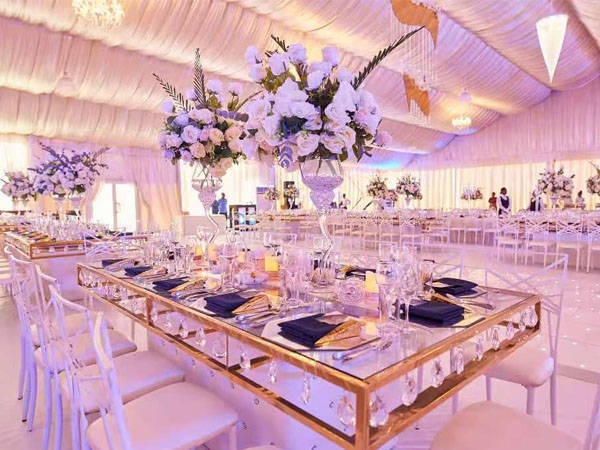
Expo Tent is a marquee manufacturer from china, marquee tents have become indispensable temporary shelter solutions for various outdoor activities, featuring diverse types, flexible customization, and outstanding practical advantages. Fully customizable to meet personalized demands, these tents support adjustable sizes, diverse color schemes, printed brand logos, and matched functional accessories like transparent windows, insulated linings, and waterproof sidewalls, perfectly adapting to weddings, trade shows, sports events, and corporate gatherings. Beyond flexible design, they boast remarkable strengths: premium waterproof, UV-resistant and flame-retardant materials ensure stable performance in changing weather, while lightweight aluminum frames enable quick assembly, disassembly and convenient transportation. With spacious unobstructed interior, excellent durability and cost-effectiveness, marquee tent delivers reliable, flexible and economical temporary space solutions for both commercial and personal outdoor scenarios.